


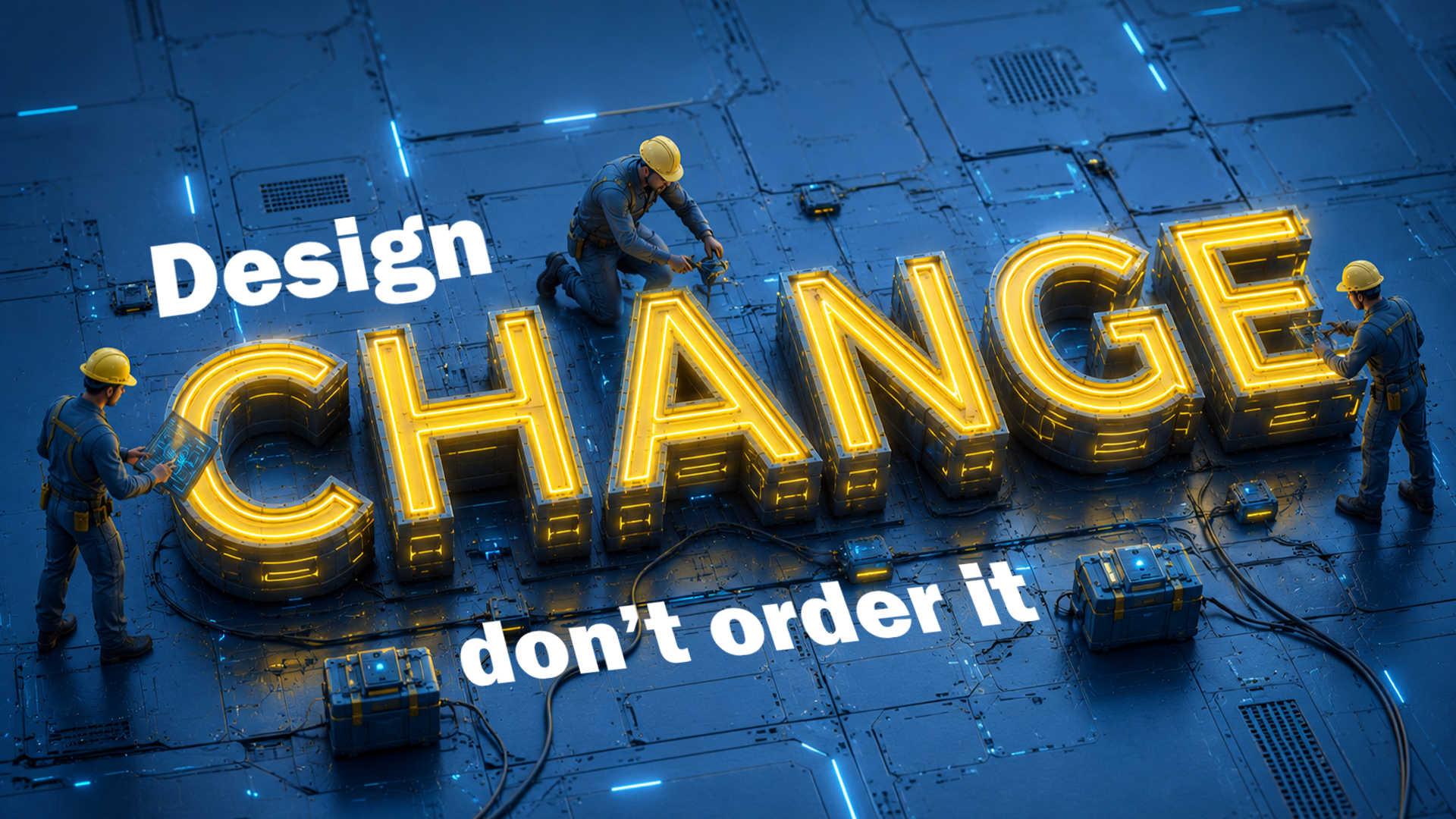
Design Change, Don’t Order It
Most leaders treat change like a command: announce the new direction, buy the tool, and expect people to comply. Yet designing behavior change is what actually moves an organization — not the announcement. Because behavior is built, not declared, the teams that win are the ones that engineer it on purpose.
Why most transformations fail
The data is sobering. Only about three out of ten large-scale transformations reach their goals. The surprising part is where the gap sits. It is rarely the strategy and rarely the technology. In most cases, the plan is fine and the tools are fine. What decides the outcome is whether people change what they do every single day.
That is the forgotten link. A roadmap on a slide does not change a habit on a Tuesday afternoon. However, when leaders ignore the human layer, even a brilliant strategy quietly stalls.
Designing behavior change beats ordering it
Here is the insight worth keeping: diagnosing behaviors before acting can multiply the odds of success by four. In other words, before you impose a new way of working, you study the current one. You learn what triggers today’s behavior, what friction keeps it in place, and what would make the desired behavior easier than the old one.
This is the difference between ordering change and designing behavior change. An order relies on willpower and motivation, which fade. A design relies on the environment, which works for you every day.
Three steps any leader can apply
You do not need a transformation office to start. You need a method. For example, apply these three moves before you demand results:
- Observe the real behavior, not the behavior you assume is happening.
- Reduce friction for the behavior you want and add friction to the one you want gone.
- Measure and adjust, instead of assuming the message was enough.
Notice that none of these steps is about a louder speech. They are about architecture: making the right action visible, easy, and trackable.
From the company to your own career
This logic does not only apply to global firms. It applies to a five-person team, to your personal habits, and to your career growth. If you want to write every morning, lay out the page the night before. If you want your team to update the tracker, make the tracker the default screen. Small design choices compound into big behavioral outcomes.
In short, designing behavior change is the most underrated leadership skill of the decade. Lasting leadership does not push behavior onto people — it makes the right behavior the easy one.
Key takeaway
The next time you want to change something — at work or in your own life — do not start with the order. Start with the design. Diagnose first, reduce friction second, and measure third. That is how change finally sticks.
McKinsey & Company — Why do most transformations fail? (H. Robinson, 2019). Read the source. The “4x” figure: McKinsey Quarterly, Transformational Change Survey (2010).